
Executive Summary
The American-Israeli war on Iran has brought great peril to the world. The worst is being suffered by civilian populations inside Iran and Lebanon, where lives have been thrown upside down by bombardment, displacement, and infrastructure destruction. But in provoking shortages and price spikes for key commodities, the war’s impacts extend far beyond active military theaters. At the time of writing, the likes of energy rationing, spiking inflation, fiscal distress, and even famine haunt presents and futures in many parts of the globe.
This report addresses the social and economic fallout that the war on Iran is spreading across the Middle East and North Africa (MENA). Focused on energy importing countries in particular, we first work to explain the MENA region’s vulnerability to commodity shocks. From this foundation, we proceed to estimate how the war stands to impact macroeconomic and developmental performance. Thereafter, we turn to social conditions, probing the distributive effects that the war is poised to precipitate.
Our research yields many findings. Concerning the causes behind MENA economies’ vulnerabilities to the commodity shock, we pinpoint two primary variables. The first is the constitution of contemporary growth models: Due dependence on relatively high levels of export income and carbon churn, respectively, many regional economies swing with exogenous developments to a comparatively high degree. The second variable is positioning within the global financial system. By virtue of this positioning, MENA countries are likely to experience disproportionately large reductions in investment as a result of shifts in conditions inside global capital markets. Depending on policy decisions taken at the Federal Reserve, they may also experience heightening debt distress and strains on national currencies.
On the macroeconomic outlook, we project that output losses this year will be larger for the region than what is currently forecasted by the International Monetary Fund (IMF) and United Nations Development Programme (UNDP). The divergence stems from the IMF and UNDP’s calculations being unduly optimistic on commodity prices. Across more distal horizons, we see prolonged stagnation as a real possibility, especially if monetary conditions tighten.
As for potential distributive consequences, our analysis suggests that the war is likely to increase inequality and immiseration. By way of job and real income losses, middle and lower classes across the region will likely bear the brunt of the damages suffered in the months to come. Contrarily, wealthier social categories are already seeing their fortunes augmented through capital gains and increasing interest income–and this should be expected to continue going forward.

This publication has been supported by the Rosa-Luxemburg-Stiftung. The positions expressed herein do not necessarily reflect the views of Rosa-Luxemburg-Stiftung.
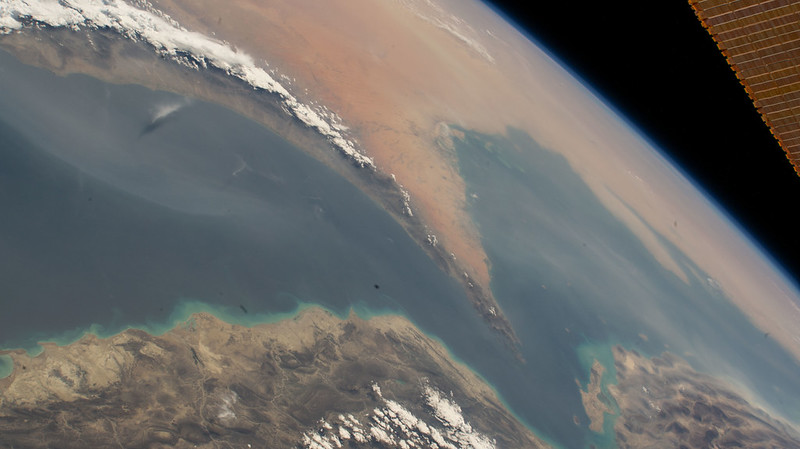
Photo Credit: NASA Johnson, “The Strait of Hormuz connects the Gulf of Oman with the Persian Gulf” (August 2022)