
Introduction
The history of extractivism in Africa is long and deeply entrenched, shaped by colonial conquest, post-independence commodity dependence, and waves of resource liberalization.[1] Across these historical phases, African economies have remained structurally integrated into global markets primarily as suppliers of raw materials. Value addition, industrial upgrading, and technological control, meanwhile, have remained concentrated in the Global North. [2] Although the actors, institutions, and modes of appropriation of natural resources have shifted over time, the underlying pattern of unequal exchange and external control over Africa’s resources and economic systems have persisted. [3]
Presently, we are witnessing the emergence of a new phase of extractivism driven by the global energy transition. In the name of “decarbonization” and “net zero”, there is a renewed global scramble for Africa’s mineral. Like the arrangements of the past, those advanced under decarbonization stand neither to contribute to Africa’s industrialization nor to bolster the continent’s ecological resilience.[4] This emerging configuration—often described as green extractivism—is centered upon the large-scale extraction of Energy Transition Minerals and Metals (ETMs) such as cobalt, lithium, copper, which are essential for renewable energy technologies including electric vehicles, solar panels, wind turbines, and battery storage systems.[5] In the context of Africa, its pursuit is justified through reference to the climate crisis and the collective imperative of the transition to low-carbon energy systems.[6][7] Such a framing obscures the uneven social, environmental, and political costs being borne by communities located at the peripheries of global supply chains. [8] Indeed, rather than representing a rupture with earlier extractive regimes, green extractivism is poised to deepen existing patterns of resource appropriation, and to perpetuate relations of dependency between core and peripheral regions through the unequal exchange of value and materials.[9]
Green Extractivism in a Multipolar World
Africa occupies a structurally pivotal position within the global supply chains relevant to the energy transition. Endowed with approximately 30% of global mineral and metal reserves, the continent has become a key site for the extraction of resources required for decarbonization technologies.[10] However, rather than enabling structural transformation within African economies, this renewed demand is reinforcing external dependence on raw material exports and deepening Africa’s incorporation into extractive global value chains.
Against this backdrop, the race for Africa’s critical minerals has intensified into a multipolar competition involving China, the United States, the European Union, and emerging Gulf actors.[11] The emerging geopolitical scramble is not only marked by the introduction of new actors, but a reconfiguration of extractive governance under the language of the green transition and sustainability.[12]
China-led Extractive Expansion in Africa’s Critical Mineral Sector
China operates as a dominant player in Africa’s critical mineral sector through extensive investments in mining infrastructure, processing facilities, and long-term supply agreements linked to global battery and electric vehicle supply chains. Beyond extraction itself, Chinese firms increasingly control strategic segments of downstream mineral processing and refining, particularly in cobalt and lithium value chains, thereby consolidating their position within the global clean technology economy.[13]
For example, in the Democratic Republic of the Congo (DRC), Chinese firms are major entities in the cobalt economy through control of mining concessions, the output of which serves as a critical feedstock for battery supply chains.[14] The supply chains in question are closely connected to artisanal and small-scale mining networks, where extensive human rights violations have been documented, including child labor and hazardous working conditions.[15] While such practices are not exclusive to Chinese-run sites, Chinese firms are implicated in the abuse by way of their primacy within the broader cobalt procurement and processing networks.[16][17] This reality helps clarify the governance gaps which pervade so many critical mineral supply chains: Due to fragmented institutions, lax regulations, and socially unequal extraction systems in countries or regions rich in resources, exploitation and abuse has become baked into our green transition.[18]
Similar dynamics are also evident in lithium and cobalt extraction projects associated with Chinese mining companies across Zimbabwe, Namibia, and Zambia. Business operations in these countries have been linked to labor exploitation, environmental degradation, land dispossession, and the forced displacement of local communities.[19][20] In Zambia, a major chemical spill linked to Sino Metals Leach Zambia—a subsidiary of a Chinese state-owned enterprise—contaminated parts of the Kafue River in 2025 with hazardous heavy metals. This incident raised serious concerns over water security and ecological integrity, given the river’s standing as a major national water source.[21] Like in the DRC, these kinds of outcome highlight the tensions inherent to rapidly expanding green mineral supply chains in the context of host states with weak regulatory enforcement capacities.
EU Critical Raw Materials Act and US Inflation Reduction Act: Externalizing Green Extractivism to Africa
Similarly extractive dynamics are evident in European policy frameworks such as the EU’s Critical Raw Materials Act (CRMA). While presented as a strategy to strengthen supply chain resilience and strategic autonomy, the legislation reinforces continued dependence on external supply chains: After all, come 2030, the EU’s strategy dictates that critical materials will still be predominantly sourced via imports.[22] Specifically, the EU aims to import at least 90 % of extracted materials and 60 % of processed materials from resource-rich regions, particularly Africa.[23] Within this framework, Africa is positioned primarily as a strategic supplier of raw materials required for Europe’s green industrial transition. Although the CRMA emphasizes sustainability, diversification, and secure supply chains, critics argue that the character of the policy reproduces unequal material relations in which extraction and associated environmental and social burdens are increasingly displaced to producing regions in the Global South.[24] As argued by Boretti (2025)[25] Manjonjo and Mokgonyana (2024)[26], this configuration enables Europe to present a low-carbon domestic profile while relying on a globally “brown” supply chain–an arrangement that effectively outsources pollution, labor exploitation, and ecological degradation to the Global South.
Comparable dynamics are also visible in the United States’ Africa engagements, particularly those realized through the Inflation Reduction Act (IRA) and associated “friend-shoring” strategies. These plans prioritize securing supply chains for electric vehicle batteries and renewable energy technologies.[27] Framed as an effort to reduce dependence on geopolitical rivals such as China, the measures in question are expanding US strategic interest in African critical mineral corridors, particularly the Lobito Corridor linking the Democratic Republic of the Congo and Angola to Atlantic export routes.[28] Such arrangements likewise stand to reproduce forms of green neo-colonialism by reinforcing Africa’s role as a supplier of raw materials while limiting local participation in higher-value stages of refining, processing, and manufacturing.[29]
Emerging Role of Gulf Investment in Africa’s Critical Mineral Extraction
Gulf actors—the United Arab Emirates and Saudi Arabia most of all—are also contributing to the spread of green extractivism. In recent years, the two GCC powers have become among the largest sources of foreign investment flows into Africa, a status achieved through allocating capital to large-scale mining projects, renewable energy infrastructure, and land-intensive projects related to agriculture and carbon offsetting.[30] As Gulf economies seek to diversify beyond hydrocarbons and position themselves within emerging green industrial chains, Africa’s mineral resources have become strategically important to their long-term economic and geopolitical ambitions.[31]
Crucially, much of the Gulf’s investment has been deployed through sovereign wealth funds and state-linked enterprises and is structured primarily as direct project investment rather than sovereign lending.[32] For example, from 2013 until mid-2025, Emirati-backed Emirates Global Aluminium (EGA) operated Guinea’s Sangaredi bauxite mine and Kamsar port, which became among the world’s major bauxite export operations.[33][34] Similarly, Abu Dhabi’s International Resources Holdings (IRH) committed US$1.1 billion to Zambia’s Mopani Copper Mines, acquiring a 51% stake in the operation through the state-owned ZCCM Investments Holdings (ZCCM-IH).[35] The latter transaction generated domestic debate regarding transparency, parliamentary oversight, and foreign ownership of strategic mining assets, with critics arguing that large-scale mineral agreements continue to marginalize public participation while reinforcing external control over nationally significant resources.[36]
Beyond Guinea and Zambia, Gulf-linked companies have expanded their extractive footprint through agreements involving copper, iron ore, lithium, and other critical minerals in the Democratic Republic of the Congo, Angola, Tanzania, Burundi, and Kenya.[37] Although these investments are frequently framed as forms of South–South cooperation and sustainable development partnerships[38], they too risk reproducing extractive development patterns centered on raw material exports: Prospects of contributions to local industrialization, technological upgrading, or equitable value distribution are quite limited.[39][40]
The picture, then, is one where Gulf engagement in Africa’s critical mineral sector is embedded within the broader political economy of green extractivism. Rather than fundamentally transforming Africa’s position within global production systems, Gulf capital may reinforce externally driven resource dependence under the expanding geopolitical competition surrounding the global energy transition.
The Dark Side of the Green Transition in Africa’s Critical Mineral Frontiers and a Different Way Forward
The global energy transition is frequently presented as a universal pathway toward sustainability and climate mitigation. However, accelerating demand for critical minerals is generating new forms of extractive pressure across Africa. Under the discourse of decarbonization and green development, competing geopolitical actors—including China, the European Union, the United States, and Gulf states—are intensifying engagements in Africa’s mineral sector in ways that risk reproducing longstanding patterns of dependency, unequal exchange, and external control over strategic resources. Although these actors pursue different geopolitical and economic interests, their approaches converge around a common objective: securing stable access to the minerals required for low-carbon technologies and industrial competitiveness. In practice, this reinforces Africa’s role as a supplier of raw materials, while value addition, technological upgrading, and industrial transformation remain concentrated elsewhere.[41] The result is a reconfigured form of extractivism in which the environmental and social costs of the green transition are disproportionately displaced onto mineral-producing regions in the Global South.
The expansion of critical mineral extraction across Africa is already generating significant social, environmental, and political tensions, including labor exploitation, ecological degradation, displacement of local communities, and growing concerns over resource sovereignty. In this sense, the energy transition is not simply a technological shift but also a spatial and political reorganization of extraction.[42] Herein, the pursuit of decarbonisation produces new geographies of vulnerability, or what scholars describe as “sacrifice zones”. This points to a broader “green energy bargain”, one in which sustainability gains in one part of the world are offset by intensified extraction and degradation elsewhere.[43][44]
Without stronger regulatory frameworks, meaningful local value addition, and greater African control over mineral governance and industrial policy[45], the transition to a low-carbon economy will consolidate rather than dismantle historical patterns of extraction under a green developmental discourse. A genuinely just energy transition must therefore move beyond securing mineral supply chains for external powers. It must instead prioritize resource sovereignty, equitable development, and the structural transformation of African economies.[46] Failing this, green transition will not represent a break from the past, but a reinvention of it—deepening existing global inequalities under the guise of green extractivism.
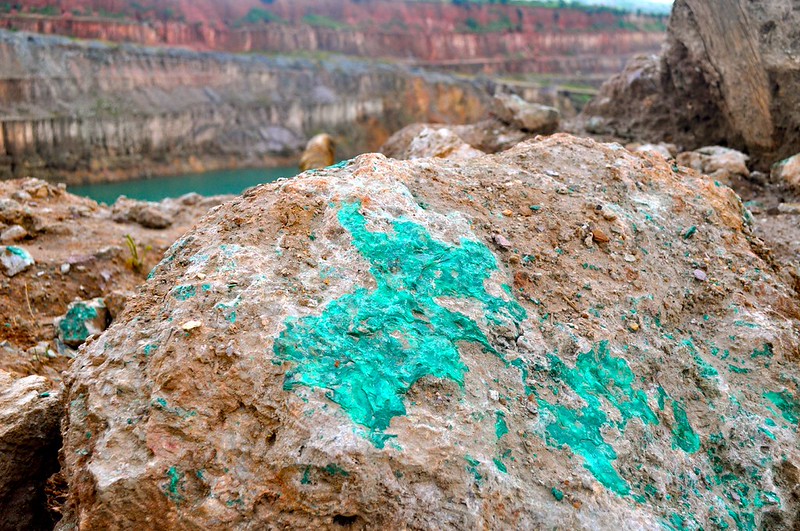
Photo credit: Fairphone, “Copper everywhere”.
[1] Pereira, Ch. and Tsikata, T., “Contextualising Extractivism in Africa,” Feminist Africa, 2(1), 2021.
[2] Hormeku-Ajei, T. and Goetz, C., “A History of Resource Plunder,” 2021.
[3] Idachaba, E., “The Evolution of Sustainability in Africa: From Colonial Exploitation to Climate Action,” The Round Table, 115(2), 2026, 260–273, https://doi.org/10.1080/00358533.2026.2635601
[4] Tittor, A., “Postfossil Extractivism: A New Lens on Decarbonization’s Land and Material Intensity,” The Journal of Peasant Studies, 2026, https://doi.org/10.1080/03066150.2025.2606878
[5] Brown, D., Zhou, R., and Sadan, M., “Critical Minerals and Rare Earth Elements in a Planetary Just Transition: An Interdisciplinary Perspective,” The Extractive Industries and Society, 2024, https://doi.org/10.1016/j.exis.2024.101510
[6] Matanzima, J. and Loginova, J., “Sociocultural Risks of Resource Extraction for the Low-Carbon Energy Transition: Evidence from the Global South,” The Extractive Industries and Society, 18, 2024, https://doi.org/10.1016/j.exis.2024.101478
[7] Bainton, N., Kemp, D., Lèbre, E., Owen, J.R., and Marston, G., “The Energy-Extractives Nexus and the Just Transition,” Sustainable Development, 29, 2021, 624–634, https://doi.org/10.1002/sd.2163
[8] Bruna, N., “Green Extractivism and Expropriation of Emission Rights,” Berliner Gazette, 2023.
[9] Feliz, M. and Melon, E., “Beyond the Green New Deal? Dependency, Racial Capitalism and Struggles for a Radical Ecological Transition in Latin America,” Geoforum, 145, 2023, https://doi.org/10.1016/j.geoforum.2022.10.010
[10] Boafo, J., Dotsey, S., and Spencer, R., “Energy Transition Diplomacy: The EU’s Pursuit of Africa’s Critical Minerals for Renewable Energy at Whose Expense?,” Energy Research & Social Science, 127, 2025, https://doi.org/10.1016/j.erss.2025.104213
[11] A. Erkan, “The New Great Game: Africa’s Critical Minerals, China’s Supply Chain Hegemony and the US’s Maritime Counter-Strategy,” STRASAM, 2026, https://strasam.org/.
[12] J. Onyino and W. Jiang, “China and the US Want Africa’s Critical Minerals. Will African Countries Actually Benefit?” The Diplomat, 2026, https://thediplomat.com/.
[13] Ibid
[14] Science Insights, “Who Owns Congo’s Cobalt Mines? China, Glencore & More,” 2026, https://scienceinsights.com/.
[15] Amnesty International, “This Is What We Die For: Human Rights Abuses in the Democratic Republic of the Congo Power the Global Trade in Cobalt” (London: Amnesty International, 2016).
[16] Organisation for Economic Co-operation and Development (OECD), “OECD Due Diligence Guidance for Responsible Supply Chains of Minerals from Conflict-Affected and High-Risk Areas,” 3rd ed. (Paris: OECD Publishing, 2019), https://doi.org/10.1787/9789264252479-en.
[17] International Peace Information Service (IPIS), “Analysis of the Interactive Map of Artisanal Mining Areas in Eastern Democratic Republic of Congo,” 2023.
[18] He, H. and Shan, B., “Rent Dissipation and Administration of Mining Rent-Seeking Activities in Resource-Rich Regions,” Arab Journal of Geosciences, 2021
[19] Mambondiyani, A., “Lithium Boom: Zimbabwe Looks to China to Secure a Place in the EV Battery Supply Chain,” Climate Home News, 2024.
[20] Matanzima, J., “Displaced by the Transition: The Political Ecology of Climate Change Mitigation and Lithium Extraction in Zimbabwe,” The Extractive Industries and Society, 2024, https://doi.org/10.1016/j.exis.2024.101572
[21] Nantulya, P., “China’s Critical Minerals Strategy in Africa,” 2025.
[22] HKTDC Research, “EU Critical Raw Materials Act: Opportunities and Challenges for Global Supply Chains,” 2026.
[23] M. Pereira, “The Future of Europe Lies in Securing Its Own Raw Materials,” 2025.
[24] A. Boretti, “Green façades, enduring dependencies: European Union’s battery and hydrogen strategies as modern neocolonialism,” International Journal of Hydrogen Energy, 129 (2025), 193–198. https://doi.org/10.1016/j.ijhydene.2025.04.260
[25] Ibid
[26] K. Manjonjo and K. Mokgonyana, “Foreign countries are lining up to exploit Africa’s critical minerals,” Africa at LSE, 2024, https://blogs.lse.ac.uk/africaatlse/ (article: “Foreign countries are lining up to exploit Africa’s critical minerals”
[27] U.S. Department of Energy, “Bipartisan Infrastructure Law and Inflation Reduction Act: Clean Energy Supply Chains and Critical Minerals Strategy,” 2023, https://www.energy.gov/.
[28] European Commission, “Critical Raw Materials Act: Secure and Sustainable Supply of Critical Raw Materials,” 2023, https://commission.europa.eu/.
[29] Ibid
[30] B. Payton, “Gulf cements dominance in African renewables sector,” African Business, 2026, https://african.business/.
[31] H. Najimdeen, “The GCC’s Strategic Footprint: Gulf Investment as an Emerging Power Bloc in Africa,” Al Jazeera Centre for Studies, 2025, https://studies.aljazeera.net/.
[32] S. Adeyemi, “UAE, Saudi Arabia emerge as power brokers in Africa’s $133 billion clean energy future as US, UK funding slows,” Business Insider Africa, 2026, https://africa.businessinsider.com/
[33] J. Calabrese, “The Gulf’s Mineral Gambit: Shaping the Global Race for Critical Resources,” Gulf International Forum, 2026, https://gulfif.org/.
[34] Tensions later emerged between EGA and the Guinean government over customs duties, export controls, and broader questions regarding national sovereignty over strategic mineral resources. In 2025, Guinea reportedly initiated procedures to revoke EGA’s mining licence, reflecting wider efforts by several African governments to renegotiate extractive arrangements and assert greater control over mineral governance
Mining Technology, “Guinea to cancel Emirates Global Aluminium’s bauxite mining licence,” 2025, https://www.mining-technology.com/.
[35] H. Kinkoh, “The Changing World Order and GCC-SSA Relations,” 2024.
[36] LT, “The Controversial Sale of Mopani: A Betrayal of Zambia’s Mineral Sovereignty,” Zambia, 2025
[37] Ibid
[38] M. Wilson, “The GCC and Africa in 2026: Toward a New Model of Partnership,” 2026.
[39]H. Dempsey and C. Cornish, “How Gulf states are putting their money into mining,” 2024.
[40] M. Tayob and C. McLean, “Gulf capital and African extractive development: continuity and constraint in green transitions,” 2025.
[41] Sh. Dou, D. Xu, Y. Zhu, and R. Keenan, “Critical mineral sustainable supply: Challenges and governance,” Futures, 146 (2023), 103101. https://doi.org/10.1016/j.futures.2023.103101
[42] J. Köppel and M. Scoville-Simonds, “What should ‘we’ do? Subjects and scales in the double-bind between energy transition and lithium extraction,” The Extractive Industries and Society, 17 (2024), 101376.
[43] J. Schwab and N. C. Diaz, “The discursive blinkers of climate change: Energy transition as a wicked problem,” The Extractive Industries and Society, 15 (2023), 101319.
[44] D. Brown, R. Zhou, and M. Sadan, “Critical minerals and rare earth elements in a planetary just transition: An interdisciplinary perspective,” The Extractive Industries and Society (2024), https://doi.org/10.1016/j.exis.2024.101510.
[45] E. Gacuruzwa, “Africa Mineral Strategy Shifts Toward Value Addition and Control,” FurtherAfrica, 2025.
[46] K. Manjonjo, F. Tassan-Viol, K. Mokgonyana, and L. Martini, “Reimagining Africa’s Critical Mineral Value Chains: From Extraction to Equitable Green Industrialisation in a Multipolar World,” T20 Policy Brief, 2025.