
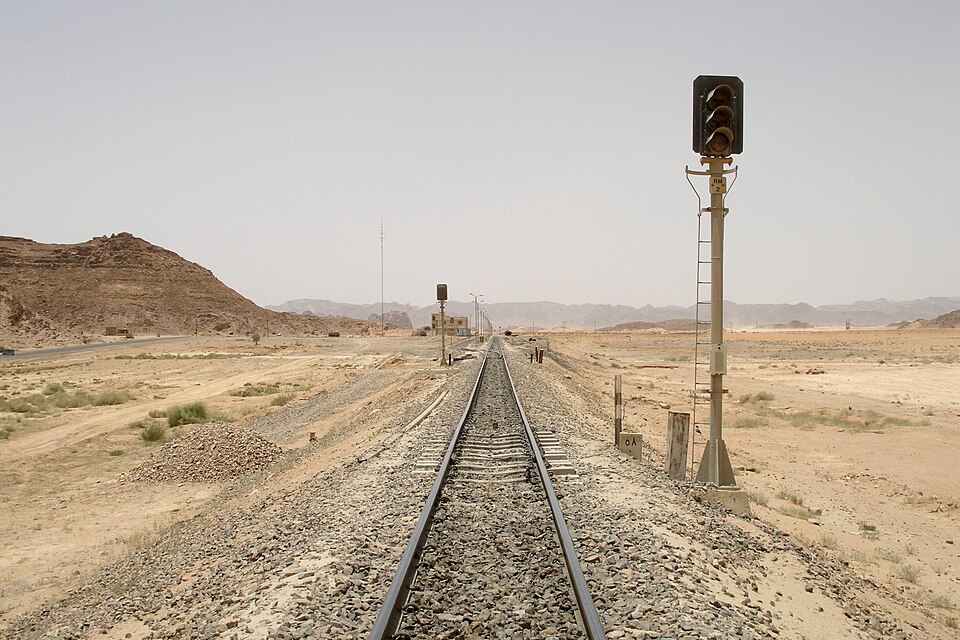
Introduction
In August 2026, both houses of Jordanian Parliament passed a draft amendment to the Real Estate Property Law. The vote triggered widespread debate across the country, with the controversy centering on revisions to the law’s language around what is called “legal quarter”. Previously, the provision had allowed the government to expropriate 25 percent of any land for the purposes of constructing public roads. With the amendments introduced, however, the government would also be empowered to do so in the case of railway lines[1].
The inclusion of railways was hardly incidental. Historically, Jordan was connected to the Arabian Peninsula in the south and to Turkey in the north through the Hijaz Railway, which had been built by the Ottomans in the early 1900s. After large portions of the railway were destroyed during World War I by Arab revolutionaries, for more than a century, it would largely fall into disuse. Shortly after Israel’s genocide in Gaza commenced, however, plans to revive railway connections gathered momentum. On November 1, 2023, the UAE and Jordan signed a memorandum of understanding (MoU) proposing an investment package worth $5.5 billion, almost half of which was to be allocated to rail projects[2]. Roughly a year later, in September 2024, the MoU was operationalized through four agreements specifying the particulars for the construction of 360km of rail lines[3].
With a bill of $2.3 billion, the track to be laid and/or refurbished is to connect the Port of Aqaba to two major sites of mineral extraction: the phosphate mines of Al Shidiyah, north-east of the city of Aqaba, and the potash mines at Ghor Al Safi, north of Aqaba and south of the Dead Sea. Advance of the project was expedited in April upon the signing of an implementation agreement. Language contained therein specifies that the railway will be developed as a public-private partnership (PPP) organized under a build-own-transfer (BOT) arrangement. A special purpose vehicle (SPV) was established and vested to serve as the private developer. Named the Jordanian Emirati Rail Company, the SPV is jointly owned by Jordanian and Emirati parties.[4] And since the ink on April’s contracts dried, the railway project’s scope has expanded further. Current plans call for the incorporation of Ma’an’s logistics facilities and for a potential move beyond direct mineral transportation: At the time of writing, proposals concerning inland logistics development, including the Madounah area east of Amman, are being bandied about.[5] [6]
By way of aforementioned reforms to the Real Estate Property Law, the rail project in question is poised to have substantial impacts on Jordan’s prime agricultural lands and the communities that rely upon them. The connection between Aqaba Port and the mines of the Arab Potash Company will traverse much of the south Jordan Valley, piercing Ghor Al Safi, Ghor Fifa and other surrounding areas. Local farms in the immediate vicinity, those to the west of Wadi Araba Road most of all, face the risk of land being expropriated. In total, the activities are of Jordanian Emirati Rail Company are expected to affect 1,325 dunams (1,325,000.00 m2) of fertile land in the area[7]. Attendant land acquisitions by the Arab Potash Company—which plans to expand its operations to take advantage of rail connectivity—will spread the rail project’s impacts on agriculturists even further.
Expectantly, the prospective dislocations have inspired local opposition to the rail ventures themselves and the legislation that is to clear their way. Such developments draw into relief how questions of resource extraction, geopolitics, and sovereignty intersect in contemporary Jordan.
Extractive Industries and the Jordanian Economy
Jordan’s potash and phosphate industries have historically occupied a strategic position in the country’s economy, constituting major sources of export earnings and foreign exchange. According to the Ministry of Energy and Mineral Resources, in 2021, the mining sector—encompassing extractive and processing activities—contributed approximately 9.12 percent to Jordan’s GDP and accounted for 30.4 percent of national exports[8]. Nor does the sector’s impacts end there. Jordan’s mining outputs feed a number of downstream industries, notably including fertilizers, phosphoric acid, and bromine production, which on their own buttress the national balance of payments[9].
Though a small country, Jordan is a genuine global power when it comes to phosphate rock and potash. In 2024, it ranked fifth worldwide in phosphate rock production and eighth in the case of potash[10]. Such standing reflects a decade’s worth of concerted effort to boost mining sector capacity. Between 2016 and 2025, phosphate production leaped by more than 50 percent, climbing from eight million tonnes to more than twelve. Potash extraction, meanwhile, reached 2.84 million tonnes in 2024.
As intimated, this upscaling of mining capacity was a key precursor and justification for the Aqaba railway project. Designed to connect major phosphate and potash production sites to maritime export terminals, the plan is for the railway to accommodate approximately 16 million tonnes of mineral freight annually[11].
The Arab Potash Company: An Abbreviated Corporate History
The Arab Potash Company (APC) was established in 1956. Two years later, it was granted a hundred-year exclusive concession license for the extraction, manufacturing, and marketing of minerals from the Dead Sea.
As part of a privatization push, the Jordanian state sold half of its share in APC to Canada’s Potashcorp in 2003. Notably, the latter, a global player in the fertilizer and potash markets, was an equity holder in Israel Chemicals Ltd. at the time . The transaction, which saw Jordanian public entities become minority shareholders in APC, brought in roughly $173mn to the state coffers.[12] [13] In selling the deal, policymakers emphasized the APC’s commercial struggles, referencing the firm’s recorded loss of 55 million JOD in 2003. But the numbers were misleading, inflated by contingent investment needs that year like the reconstruction of Dyke 19 as well as other factors such as the liquidation of Safi Salt Company. Indeed, as a general rule, the APC did quite good business. By its own reporting, net profits between 1999 and 2002 totaled 104.05 million JOD.
The APC’s bottom line quickly jumped back into the black after the new Canadian minority owners came into the fold. From 2004 to 2017, the firm recorded net profits in excess of 1.8 billion JOD. 468 million JOD of these accrued to Potashcorp by way of its equity stake. In 2018, the Canadian multinational nonetheless opted to sell its shares in APC to China’s SDIC Mining.[14] Cashing its position for 356 million JOD, PotashCorp secured a capital gain worth hundreds of millions[15]. Thereafter, the APC profit machine kept turning. Accumulated net profit between 2018 and 2025 fell just short of 1.9 billion JOD. In 2022 alone, net profits topped 600 million[16]. Such returns have been realized almost entirely through export sales: In terms of tonnage, approximately 90 percent of what the APC pulls out of the ground is bound for foreign markets.
Though to a lesser degree than in the past, by way of the Jordanian state still holding just short of 27 percent equity in the APC, it has continued to derive a fiscal gain from the company’s business. In 2025, the APC reportedly conveyed, via a range of channels, ~JOD 150 million to the public treasury. But significant as these sums are, they would have been far larger had the terms of the firm’s mining royalty obligations not been amended by a Council of Ministers decision issued in August of 2008. At that time, mining fees were established at JOD 125 per ton of potash extracted, though the state’s total take was capped at 25 percent post-tax profit[17]—excluding earnings attributable to subsidiaries, associates, and joint ventures. With potash production reaching approximately 2.9 million tonnes in 2025, an uncapped application of the production-based royalty would have yielded approximately JOD 362.5 million, more than twice what the APC actually paid to the state in royalties and corporate income taxes combined. The gap speaks to the inequities baked into the exploitation of Jordan’s natural resources and raises questions about how gains are distributed between state, public, and private owners.
A Similar Path for the Jordan Phosphate Mines Co.
As was the case for the APC, come the late 1980s, the Jordanian state still held more than a 90 percent equity stake in the Jordan Phosphate Mines Co. (JPMC). After a series of trades, however, the last coming in 2006—when the state sold a 37 percent share in the firm to an entity controlled by the Brunei Investment Agency—public ownership was reduced to just 26 percent. The commercial reasoning behind the firm’s staggered privatization is difficult to parse: Reported net profits since 2006 amount to 3.46 billion JOD.
Such figures suggest that divestment was less guided by financials than by an intention to please IMF donors while folding select private actors into the economy’s primary circuits of capital accumulation. The hypothesis is affirmed, moreover, by the JPMC’s remuneration of board members, which has attracted both parliamentary scrutiny and public criticism. According to its financial statement of 2025, the company chairman took home 850,000 JOD in base salary compensation. The windfall is equivalent to approximately JOD 2,300 per day. Note that the minimum wage in Jordan equates to an annual income of less than JOD 3,500 and that more than half the population earns less than JOD 4,500 per annum[18]. And the 850,000 figure only captures part of the chairman’s compensation: retaining 250 thousand stock shares, the individual in question–who has been appointed as the chairman of the Jordanian Emirati Rail Company (JERC) as well[19]–collected considerable dividend payments as well.
The State’s Shifting Role in Mining
The trajectories of APC and JPMC illustrate how the privatization of strategic extractive industries has reshaped the relationship between the Jordanian state, foreign capital, and the country’s natural resources. In embracing privatization, Jordanian policymakers did not diminish the economic role of the state. Rather, they reimagined the state’s function. Where once a majority owner bound, at least partially, to social and developmental missions, the state now assigns priority to facilitating private accumulation. As the examples of APC and JPMC attest, this is pursued through the distribution of asset ownership, exclusive concession rights, and investment in infrastructure, amongst other things. Throughout, APC and JPMC have continued to contribute to Jordanian macrostability. Export earnings provide critical inflows of hard currency, and fiscal transfers help ease sovereign debt troubles. Nevertheless, it is clear that on balance, the combination of ownership structures, governance, and royalties’ arrangements has allowed a narrow elite to capture the lion’s share of the financial surplus that is juiced from Jordan’s natural resources.
The Social and Ecological Contents of the Railway
In the balance sheets of the APC and JPMC, then, a glimpse into the social contents of Jordan’s extractive industries can be had. Reduced to their components, the financials of the firms reveal a mix of local and foreign capitals making out above anyone else. The specific social and ecological consequence of the Jordanian-Emirati rail project, however, extend beyond those of the APC and JPMC alone. They also encompass the railway’s additional impacts on agriculturalists and agricultural lands.
The south Jordan Valley, located to the south and southeast of the Dead Sea, is widely regarded as one of Jordan’s best agricultural areas. Grace of its positioning approximately 400 m below sea level, farmland there is particularly fertile. Most winters, it supplies approximately twenty percent of Jordan’s vegetables and in summer, the region ranks third nationally in terms of vegetable production[20].
But as mentioned at the outset, many of these lands are now at risk of expropriation. The railway project itself stands to expropriate 1,325 dunums. Nor do the railway’s land effects end with the plots seized. The course of the rail is set to divide Ghor Al Safi into eastern and western sections[21]. Furthermore, in September 2025, the APC, seeking to expand mining output, designated 3,499 dunums (3.499 million m²) in the area for acquisition[22]. It is plausible that the firm will not come away with the full haul: Temporary law No. 55 of 2003, governing the APC’s Dead Sea concession, limits the firm’s operating area to 200,000 dunums (200 km2). Nevertheless, its intentions are clear, and where there is political will, there is often a way.
The railway plans have fueled opposition among local communities in Ghor Al Safi & Ghor Fifa. And unsurprisingly so. The region is one of Jordan’s major poverty pockets, as attested by the number of UN development projects and relief agencies operating there. But the willingness of the state to engage with the grievances being voiced is clearly wanting. Speaking to this, Nabila Al Hshush, a prominent agricultural activist and farmer representing the local community in Ghor Al Safi, was arrested and charged under Jordan’s Cybercrime Law no.17 of 2023 just prior to the official inauguration of the railway project.
Critically, the expansion of extractive activities in Jordan, poised to be expedited through the rail project, is to infringe upon rights and access to water as well. At the heart of the matter is the APC’s prodigious water consumption. In 2021, the APC consumed 12.35 million m³ of water, about 20 percent of the total for the south Jordan Valley[23]. 51.7 percent of this sum was extracted from groundwater, which the firm is licensed to pull from twenty-one wells spread across the valley (in many instances outside the boundaries of the company’s concession from the state). Meanwhile, 40.8 percent of the company’s water was supplied by municipal, public, and private suppliers, and the remaining 7.5 percent drawn from surface water.
With an eye toward upscaling mining activities, in 2016, the APC signed a financial agreement with the Jordan Valley Authority to advance the construction of the Wadi Ibn Hammad Dam. Amended in 2019, the agreement stipulates that the APC will fund the construction of the dam (at a cost of 51.5 million JOD). In exchange, the Ministry of Water and Irrigation guaranteed, across sixteen and a half years, the firm’s right to purchase 56.25 million m3 of water per annum at a preferential tariff of 0.35 JOD/m3. Then in March 2026, the APC and Ministry signed an additional memorandum of understanding (MoU) meant to facilitate cooperation and joint investments. In view of the APC’s ambitions to raise output, the agreement points to the possibility of even greater volumes of water being funneled to the APC’s industrial sites.
The inequities contained in these deals are difficult to miss. The normal water tariff for industrial buyers ranges between 1.5 JOD/m3 and 2.2 JOD/m3. In the first instance, then, public policy has been used to direct major savings on water consumption into the APC’s coffers. But the social costs of the APC’s preferential treatment are made even more pronounced when set in comparison with the conditions faced by local farmers. Since 2017, the Jordan Valley Authority has billed agriculturalists—barred from exploiting underground water unless in possession of a special permit—between 0.73 to 1.00 JOD/m3 for water[24]. These costs have rendered farming non-viable for many and contributed to a massive decline in land tilling. As of 2022, the breadth of land being farmed in the south Jordan Valley was just 38 percent of what was observed in 2004[25].
Jordanian policymakers have often presented the public-private partnership between (PPP) the APC and Jordan Valley Authority as a successful model of cooperation. What goes unspecified is how success is being defined. Indeed, the distribution of gains from the PPP have proven extremely uneven, while losses concentrate with small farmers. Zoomed out, the configuration resembles what David Harvey conceptualized with his concept of accumulation by dispossession. With the Jordanian Emirati railway, the dynamic of the state using its legal authorities to reallocate land and natural resources to deliver private gain for the few looks to again be at work.
Geopolitical Integration
The political economy of natural resource extraction in Jordan extends beyond questions of ownership and surplus distribution: it also encompasses geopolitical dependencies arising from international economic integration.
In this regard, Jordan’s subordinate relation with the UAE bears first mentioning. Viewed holistically, Emirati capital infuses the entire circuit of accumulation that Jordanian extractives open up. Firstly, there is the Emirati party holding a 50 percent equity stake in the railway project itself: namely, L’IMAD Holding, a sovereign investment platform wholly owned by the Government of Abu Dhabi (see below). Emirati parties likewise control the port where Jordanian potash and phosphates will be loaded for transport: Through a joint venture, AD Ports Group retains a thirty year concession and 70 percent stake in the Aqaba Multipurpose Port. Most critically of all, perhaps, though, is the position that L’IMAD retains on the commodity trading side of things. In 2021, Abu Dhabi’s ADQ acquired 45 percent equity in the Louis Dreyfus Company (LDC), one of the world’s largest agricultural commodity merchants. By virtue of this property, the price and volume terms at which Jordanian phosphates and potash come to market is at least partially mediated by the interests of Emirati capital.
An investment partner in Jordan’s designs for the mining industry the UAE may be. Nevertheless, in controlling the plumbing through which Jordan’s products must move to reach market, the UAE is empowered to define the terms of partnership according to its particular interests. For Jordan, the implications range from value capture to chokepoint exposure.
L’IMAD Holding: Linchpin of Abu Dhabi’s Play for Logistics Empire
In January 2026, the logistics holdings of an Abu Dhabi-based sovereign wealth fund named ADQ were consolidated under the roof of L’IMAD. Thereafter, the latter’s portfolio would include major enterprises such as Etihad Rail, TAQA, AD Ports Group, Etihad Airways, and the Louis Dreyfus Company.
These properties render L’IMAD Holding a major player in the broad field of human and commodity connectivity. AD Ports Group’s international operations extend across several regional ports and logistics facilities, including investments in Egypt, Pakistan, and the Mediterranean. Within Jordan, the firm has expanded its activities in Aqaba via the Marsa Zayed development and port management agreements. Etihad Rail has recently internationalized its ambitions, too. Its Hafeet Rail project, a joint venture with Oman Rail and another of Abu Dhabi’s sovereign wealth funds (Mubadala) entails the construction of a 238-kilometre railway connection between Oman and the UAE. In conjunction with the proposed Gulf Cooperation Council railway, Hafeet Rail create possibilities for scaled up regional railway integration. Within this system, Jordan stands to be brought into the fold as a land bridge between the Red Sea, the Arabian Gulf, and northern regional markets.
Staked across mineral transportation, port infrastructure, and agricultural trading, L’IMAD Holding brings the many different links of the international commodity supply chains under one roof, and profits from them all.
The mineral railway project also intersects with larger questions over Jordan’s positioning within regional contests over connectivity. These contests heated up after the US-Israeli war on Iran so profoundly disrupted maritime transportation through the Strait of Hormuz and Bab el-Mandab. With those sea lanes obstructed or closed, the importance of controlling alternative transit corridors has been made increasingly apparent. The value of Jordan’s Red Sea assets has heightened commensurately: With container traffic through Aqaba jumping by 155.1 percent during the first half of the year, the port’s capacity to act as a release valve in times of pressure is affirmed. In this context, Amman has come under pressure to align itself more tightly with one of the camps seeking primacy within the regional logistics order—the Abraham Axis via the India-Middle East-Europe Economic Corridor (IMEC), the Saudis and Turks through their own rail and road ventures. How policymakers navigate the choppy waters will undoubtedly impact the outlook for the country’s extractive industries.
The outlook for potash and phosphates likewise runs through the international political economy of the energy flows powering mining and processing operations. In the case of the APC, nothing moves without imported natural gas. For a sense of scale, these imports represented 81–84 percent of company’s total energy supply between 2019 and 2022[26]. Notably, sourcing such volumes has led the APC to develop indirect commercial relations with Israeli parties. In 2014—after running into issues with Egyptian suppliers during the uprisings of 2011—the firm contracted Noble Energy to provide 66 billion cubic feet of natural gas for a period of fifteen years from the Tamar field in the Mediterranean[27]. The bill was $771 million. The APC argued that the arrangement, which was reportedly brokered by then US deputy assistant secretary of state for energy diplomacy Amos Hochstein, bypassed Israel. Noble was Houston-based at the time and was bought out by the United States’ Chevron in 2020. But the natural gas came from fields controlled by Israel all the same, meaning downstream fiscal and foreign exchange benefits accrued to Tel Aviv. As such, the deal marked the first instance where Jordanian economy activity would be tied into Israeli energy, broadly defined[28]. And the APC contract would later serve as a template for Jordan’s state-owned electricity company, NEPCO, who signed its own purchase agreement with Noble Energy in 2016.
The implications of APC procuring natural gas in Israel are multiple. Firstly, the deal consolidated an asymmetry in the economic relations between Jordan and Israel, and with it, a vulnerability for the former. The costs associated with adjusting to potential gas flow disruptions, after all, fall almost entirely on Jordan: In contingencies where flows are cut from Tamar, APC’s operations could be jeopardized, particularly as its backup supplier, NEPCO, is itself dependent on Israeli gas. As such, the APC’s arrangement with Noble Energy leaves a strategically important extractive industry exposed to the whims of Israeli policy, granting Tel Aviv leverage over the Jordanian government in the process. Even in the absence of coercive measures, leverage can act as a mechanism of political discipline. Secondly, these gas deals buttress the foundations of the Israeli economy. With the expansionist, settler colonial nature of the Israeli state project becoming more apparent with each passing year, contributing to Tel Aviv’s economic power could be tantamount to self-destruction for Jordan.
Conclusion
The Jordanian Emirati railway project reveals a great deal about Jordan’s contemporary political economy. It speaks of the social foundations upon which Jordan stands in 2026. It clarifies much about the manner with which Jordanian strategic resources are integrated within regional and international circuits of capital accumulation. And it lays plain the dependencies and vulnerabilities that Jordan’s relations with the Gulf and Israel create.
Whether the configuration in place is a stable one is still to be determined. The state’s fiscal books fail to inspire confidence: sovereign debt has increased by nearly a third over the last four years, climbing from 38.49 billion JOD in 2022 to 50.12 billion as of July[29]. While a stock market boom rages in Amman, the dangers of the state ceding its social and developmental missions over recent decades haunt.
In staking the country’s future to the streamlining of surplus extraction, policymakers in Jordan have left a great many people behind, notwithstanding the developmental ambitions outlined in the Economic Modernization Vision (2022–2033). Proceeding forth with disregard for national economic sovereignty and collective prosperity is to court deepening subordination and even civil unrest.
Photo Credit: © Vyacheslav Argenberg, CC BY 4.0, via Wikimedia Commons

[1] مشتركة الأعيان تقر الملكية العقارية كما ورد من مجلس النواب – وكالة الانباء الاردنية
[2] https://www.reuters.com/world/middle-east/uae-jordan-sign-mous-worth-6-bln-state-news-agency-2023-11-01/
[3] https://jordantimes.com/news/local/jordan-uae-sign-agreements-23b-railway-project-connecting-aqaba-mining-sites; https://www.jordannews.jo/Section-112/Economy/Jordan-and-UAE-Sign-2-3-Billion-Agreements-to-Execute-360km-Aqaba-Railway-Project-50582
[4] Jordan is represented by the Jordan Phosphates Mine Company (30%), the Arab Potash company (5%), the Jordan Investment Fund (8%), and the Social Security Investment Fund (7%). According to Kuttab (2026), the Emirati side initially sought a 65% ownership stake, leaving 35% to the Jordanian parties, before negotiations resulted in the current 50–50 split. Kuttab further reports that the chairmanship of the SPV’s Board of Directors will rotate between Jordanian and Emirati representatives every two years.
[5] Relatedly, in November 2026, Jordan and Syria signed a memorandum of understanding concerning railway connectivity between the two countries. Although the initiative is separate from the mineral railway, it speaks to growing momentum around rail-based regional connectivity. Jordan, Syria sign 11 agreements to boost bilateral cooperation – The Jordan News Agency
[6] https://www.jpmc.com.jo/en/news/al-dneibat-the-aqaba-shidiya-maan-railway-project-is-a-qualitative-leap-for-the-national-economy
[7] إقرار آلية تضمن التعويض الكامل أو مبادلة الأراضي لمشروع البوتاس وسكة الحديد
[8] https://www.memr.gov.jo/ebv4.0/root_storage/en/eb_list_page/pofjmsd2021.pdf
[9] https://invest.jo/en/investment-sectors/chemicals-fertilizers
[11] https://www.jpmc.com.jo/en/news/al-dneibat-the-aqaba-shidiya-maan-railway-project-is-a-qualitative-leap-for-the-national-economy
[12] https://www.corpwatch.org/article/jordanian-privatization-extended-dead-sea
[13] https://jordantimes.com/news/local/canadian-potash-company-sell-stake-jordan%E2%80%99s-apc
[14] At the time of writing, APC is predominantly owned by investment authorities/companies from Kuwait, Libya, Iraq, India and China. The Jordanian state’s position is just short of 27%.
[15] https://jordantimes.com/news/local/canadian-potash-company-sell-stake-jordan%E2%80%99s-apc
[16] https://www.arabpotash.com/ebv4.0/root_storage/en/eb_list_page/english_annual_report_2022.pdf
[17] Arab Potash Company (APC)
[18] https://www.jpmc.com.jo/uploads/2026/04/altqryr-alsnwy-2025.pdf
[19] https://petra.gov.jo/ar/news/%D8%A7%D9%84%D8%B0%D9%86%D9%8A%D8%A8%D8%A7%D8%AA-%D8%B1%D8%A6%D9%8A%D8%B3%D8%A7-%D9%84%D9%85%D8%AC%D9%84%D8%B3-%D8%A5%D8%AF%D8%A7%D8%B1%D8%A9-%D8%A7%D9%84%D8%B4%D8%B1%D9%83%D8%A9-%D8%A7%D9%84%D8%A5%D9%85%D8%A7%D8%B1%D8%A7%D8%AA%D9%8A%D8%A9-%D8%A7%D9%84%D8%A3%D8%B1%D8%AF%D9%86%D9%8A%D8%A9-%D9%84%D9%84%D9%82%D8%B7%D8%A7%D8%B1%D8%A7%D8%AA
[20] https://husna.fm/%D8%AA%D9%82%D8%A7%D8%B1%D9%8A%D8%B1/%D8%A7%D9%84%D8%A3%D9%85%D9%86-%D8%A7%D9%84%D8%BA%D8%B0%D8%A7%D8%A6%D9%8A-%D8%A7%D9%84%D8%A3%D8%BA%D9%88%D8%A7%D8%B1-%D8%A7%D9%84%D8%AC%D9%86%D9%88%D8%A8%D9%8A%D8%A9
[21] Jadaliyya – Railway to Dispossession: Land Grabs, Potash, and the Politics of “Public Benefit” in the Jordanian Ghor
[22] An alternative alignment east of the village, away from residential and agricultural areas, deserves consideration, particularly as a similar approach was adopted near Al Shamieh, north of Aqaba.
[23] https://www.arabpotash.com/ebv4.0/root_storage/en/eb_list_page/final_apc_sr_2021_english_dec9_hr_compressed_(1).pdf
[24] https://www.addustour.com/articles/198571-%D8%B1%D9%81%D8%B9-%D8%A3%D8%B3%D8%B9%D8%A7%D8%B1-%D9%85%D9%8A%D8%A7%D9%87-%D8%A7%D9%84%D8%B1%D9%8A-%D9%81%D9%8A-%D9%88%D8%A7%D8%AF%D9%8A-%D8%A7%D9%84%D8%A7%D8%B1%D8%AF%D9%86-100
[25] https://arij.net/investigations/southern-jordan-valley-en/
[26] https://www.arabpotash.com/ebv4.0/root_storage/en/sustainability/APC_2020_SR.pdf; https://www.arabpotash.com/ebv4.0/root_storage/en/eb_list_page/english_annual_report_2022.pdf; https://www.arabpotash.com/ebv4.0/root_storage/en/eb_list_page/final_apc_sr_2021_english_dec9_hr_compressed_(1).pdf
[27] https://www.timesofisrael.com/israel-jordan-sign-500-million-natural-gas-deal/
[28] https://www.aljazeera.net/news/2014/2/20/%D8%AC%D8%AF%D9%84-%D8%A8%D8%A7%D9%84%D8%A3%D8%B1%D8%AF%D9%86-%D8%A8%D8%B4%D8%A3%D9%86-%D8%A7%D8%AA%D9%81%D8%A7%D9%82%D9%8A%D8%A9-%D9%84%D8%A7%D8%B3%D8%AA%D9%8A%D8%B1%D8%A7%D8%AF-%D8%BA%D8%A7%D8%B2
[29] Jordan’s general debt at JD50, 121 billion by end of July | Business | Ammon News; https://www.mof.gov.jo/ebv4.0/root_storage/ar/eb_list_page/arabic_sep_2026__1.pdf